Track Android 17 updates for Samsung, Pixel, OnePlus, Nothing, and Motorola phones. Check eligibility, rollout status, and what to do before upgrading.
Celebrity investor Kevin O’Leary’s Wonder Valley data center plans are under scrutiny
The Sturgeon Lake Cree Nation (SLCN) has filed for a judicial review over the project, which is planned to be the world’s largest data center
A physicist hired by the SLCN has declared the data center will release significant heat waste
A physicist acting on behalf of the Sturgeon Lake Cree Nation (SLCN) has claimed that the O’Leary Digital Wonder Valley data center would release “23 atomic bombs of energy” while adding that the declaration is “a first-order estimate intended to convey scale.”
The report by Utah State University physicist Robert Davies, working on behalf of the SLCN, whose lawyer, also adds that current regulations for developing land are not suited to projects of the data center’s scale.
O’Leary Digital Wonder Valley, plans for which were first unveiled in 2024, was conceived to be the largest on the planet when completed, and has a $70 billion budget for the 64 square kilometer (almost 15815 acres) development. Its planned location is in the SLCN’s traditional territory in Alberta, Canada.
First-order estimate
The planned scale of the data center, earmarked for a location 130 km southwest of the SLCN’s reserve, is the main point of contention, and the basis for Professor Robert Davies, of the Utah State University.
But his claim over the “23 atomic bombs of energy” demands some clarification.
“Now of course, that’s not explosions, but that’s just trying to get a sense of how much energy we’re talking about,” said Davies in the assessment. “The effect will almost certainly be large, if not extreme.”
He also notes that “every quantitative figure … should be treated as a first-order estimate intended to convey scale, to be confirmed against the developer’s own filings.”
Davies also highlights that the project could be “the largest single-site heat source on the entire planet.”
The assessment, which was prepared for SLCN’s case, emphasizes that it is “not a comprehensive environmental review, a formal expert report, or a legal opinion.”
Robust regulatory process
While Davies’ contribution to the SLCN’s judicial review filing relies on further information from O’Leary Digital, it paints a worrying picture, not least into the effects of the heat waste on the surrounding wildlife.
“I can’t imagine allowing it to go forward without those full assessments,” Davies said, while also criticizing the use of traditional environmental legislation and guidelines for giant data center projects. “When people talk about environmental regulations that these projects have to adhere to, those regulations were not created with anything of this scale in mind.”
Naturally, O’Leary Digital has responded to the filing. CEO Paul Palandjian wrote in an email “We also respect the robust and stringent regulatory process we must follow in advancing Wonder Valley… we’re having productive dialogue with Indigenous communities through consultation and engagement, and we remain committed to that work.”
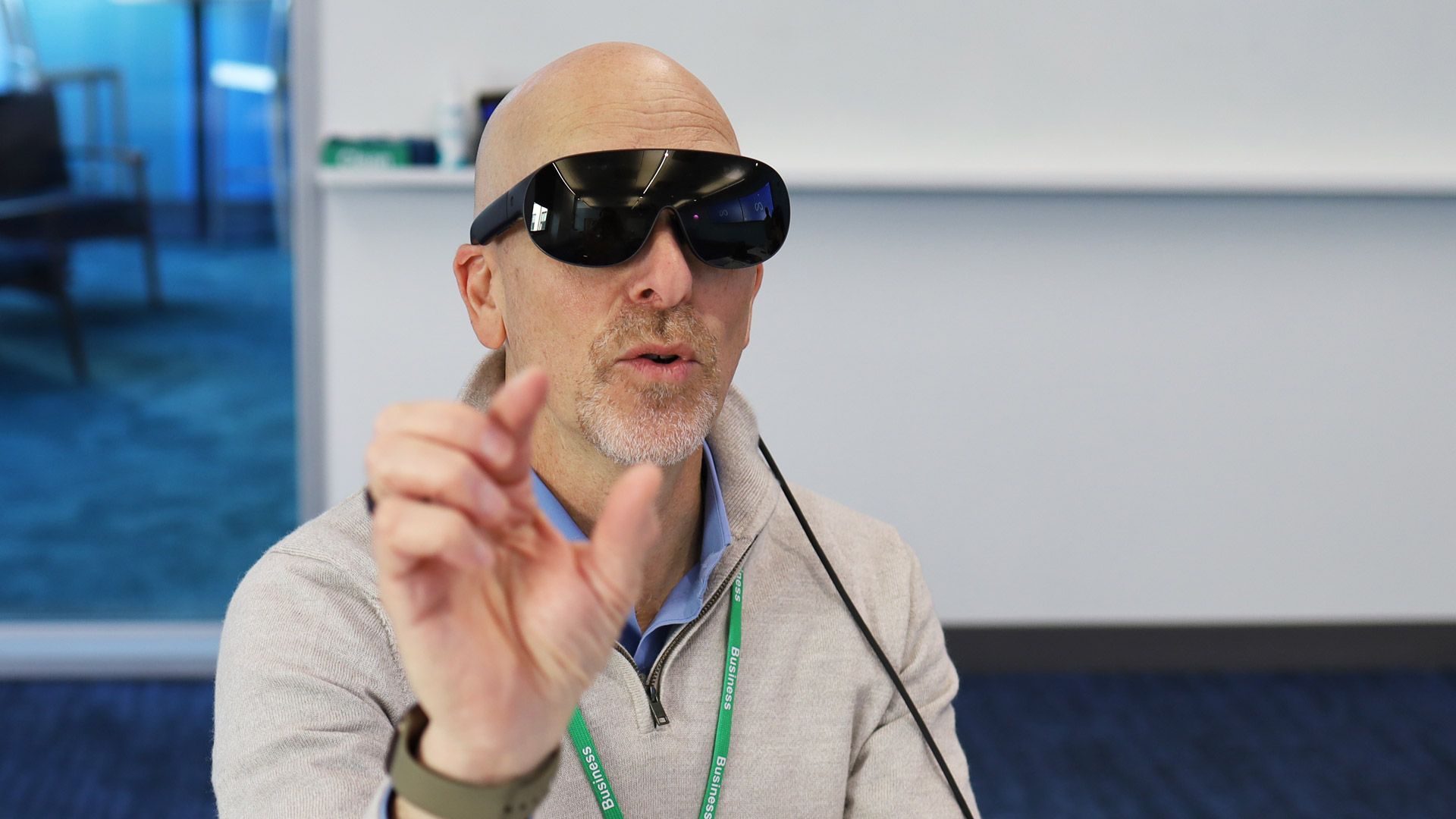
Experience counts for something, and nowhere is that more evident than on the Meta VR Glasses I finally wore this morning.
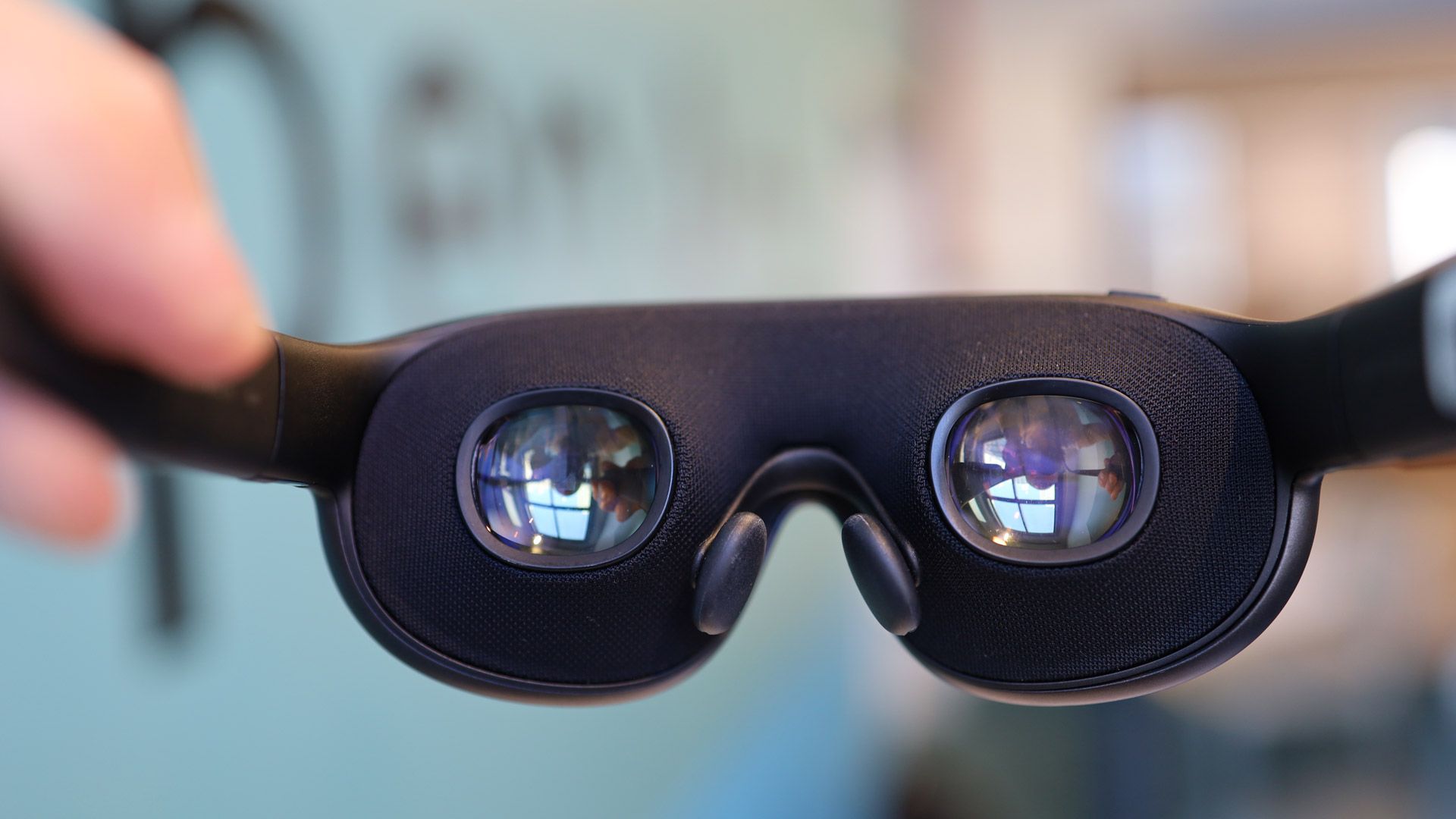
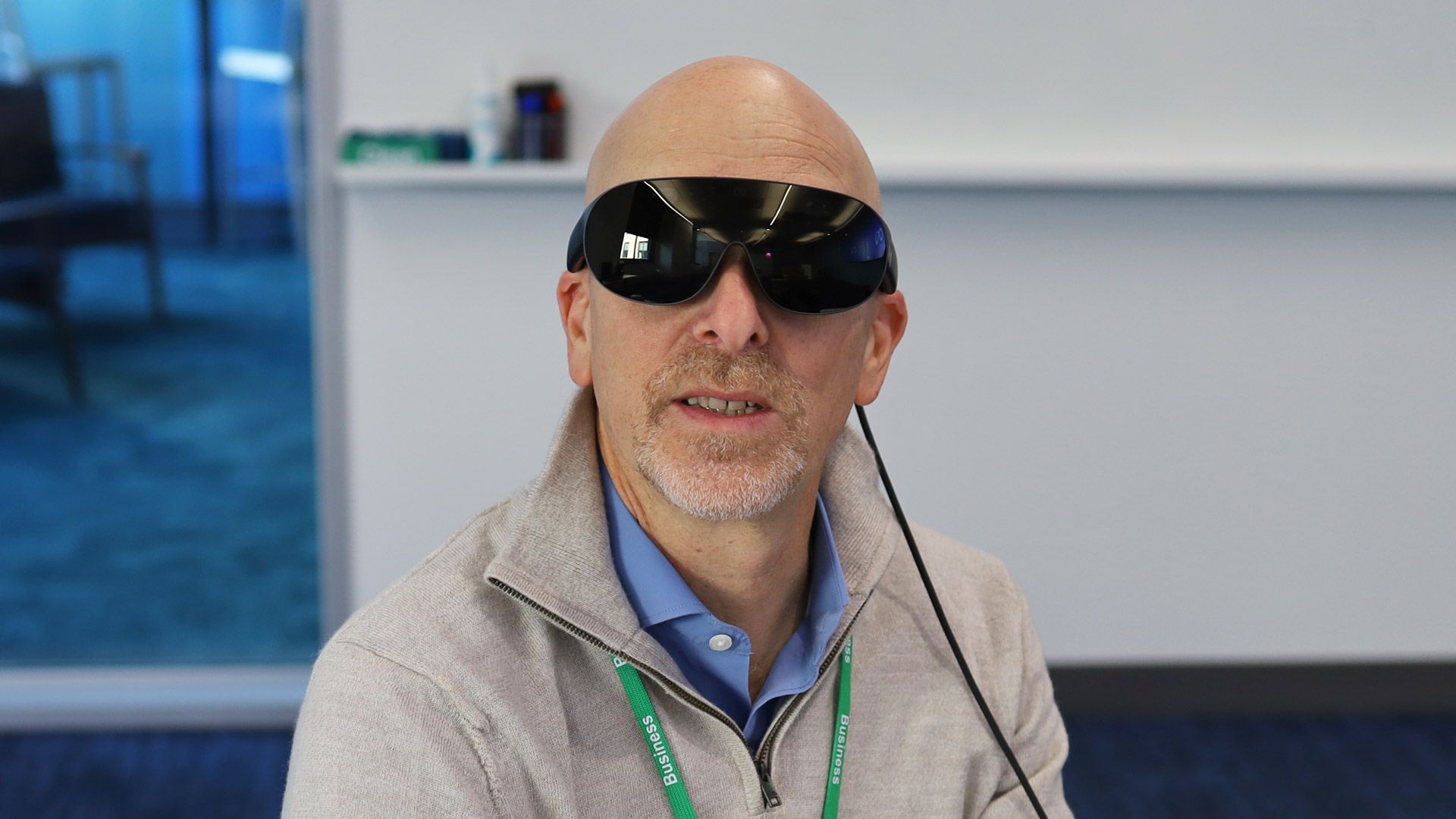
These lightweight, intuitive, and engrossing VR glasses shed the weight and overdesigned fussiness of previous VR and mixed reality headsets to deliver a subtle, smart, eminently comfortable and fun wearable experience that is equally at home entertaining you with wild VR movies or expansive, productivity-enhancing virtual desktops.
Granted, my walkthrough of the $1,299 VR Glasses that are expected to arrive next spring (April-early June) of next year was a breezy 45 minutes, but that was ample time to realize that Meta VR Glasses were truly built on all the lessons of not only Meta Quest VR, but also by watching competitors like Apple and even Samsung struggle to inspire consumers with stunning but also expensive or somewhat unwieldy mixed reality experiences.
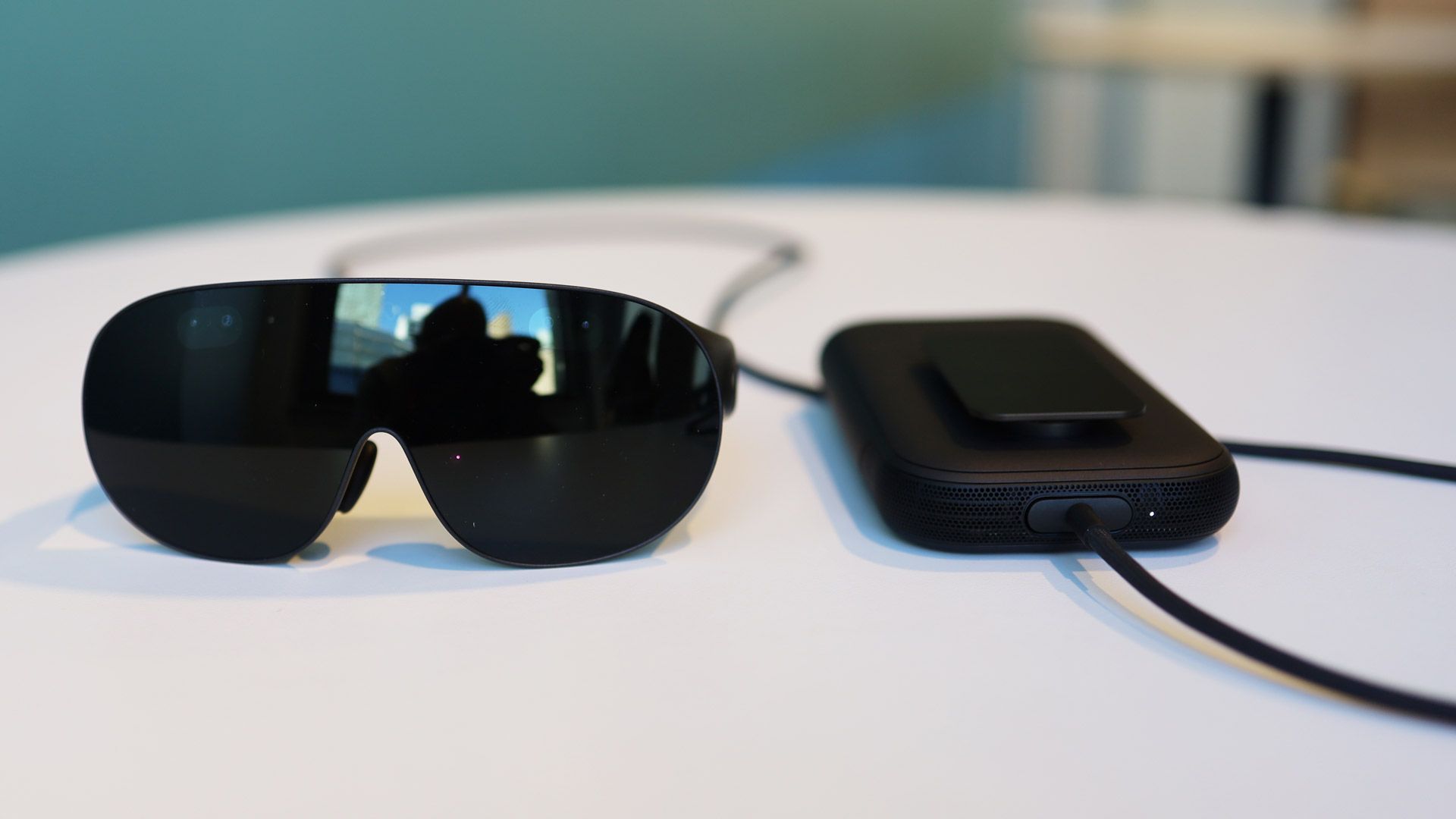
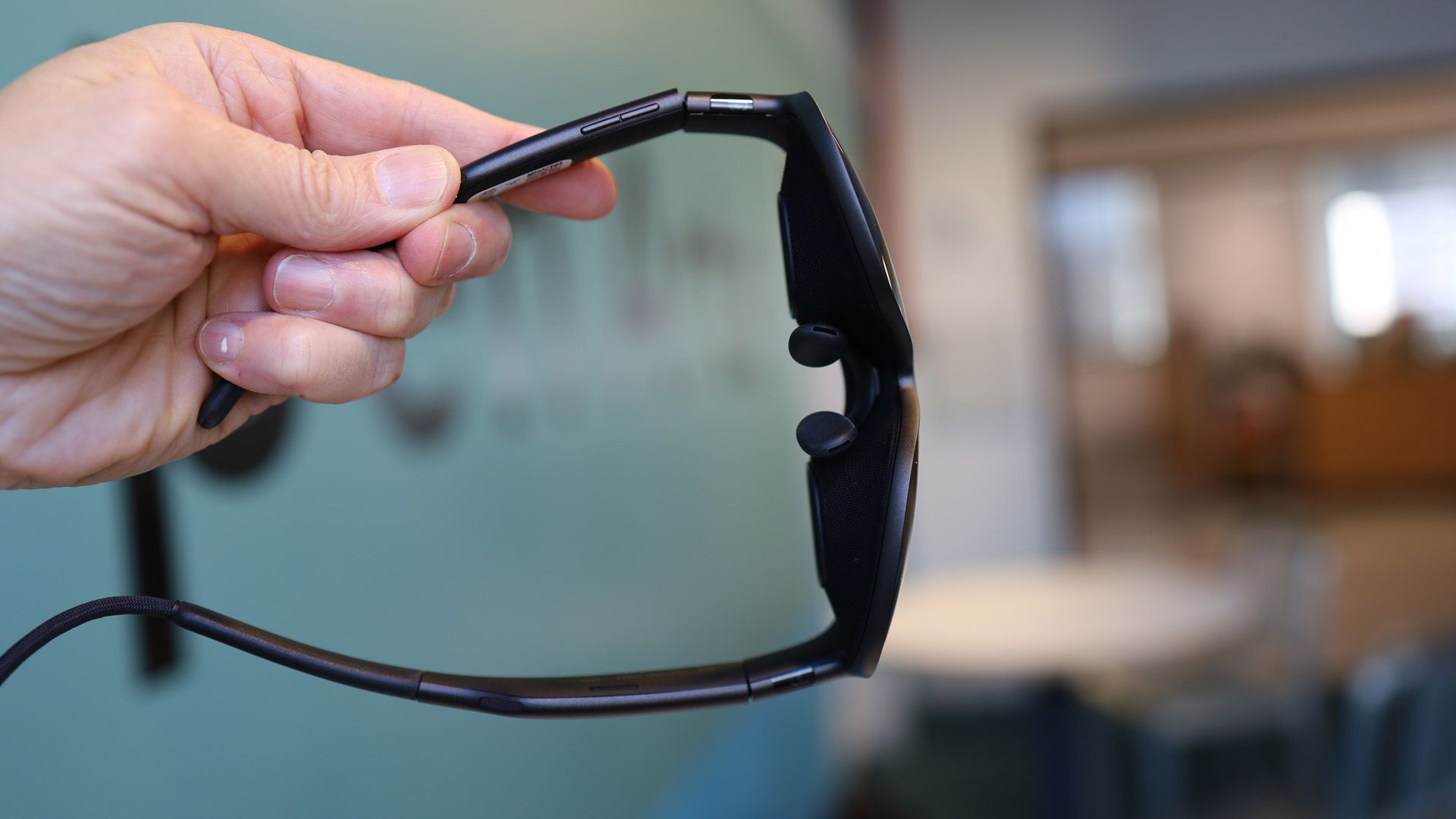
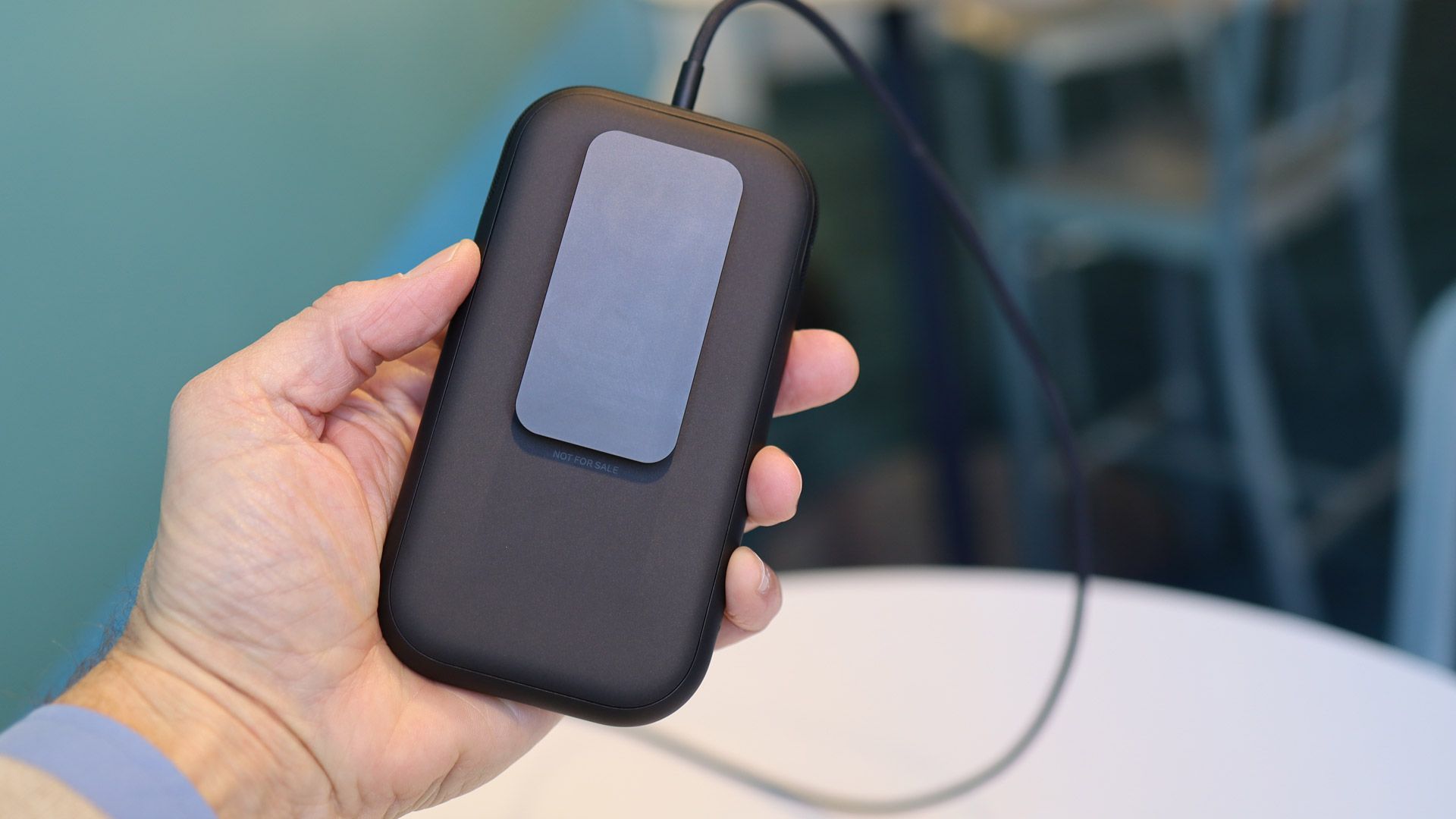
In my view, Meta’s decision to move compute, storage, and battery out of the headset and into a 300g belt- or pocket-friendly puck pays design dividends. The wearable, which looks like a slightly oversized pair of sunglasses, is so comfortable that I barely felt them on my face, and after 45 minutes of continuous use, I didn’t remove the 100-gram frames with a sense of relief. If anything, I was sad my all-too-brief interlude was over.
Without needing to support CPUs, GPUs, NPUs, RAM, a heavy battery, or even SD storage, Meta could focus on basic aesthetic appeal. The Meta VR Glasses feel and look spare, but in a positive way. By design, they do not cut you off from the outside world (there will be an optional light shield), so there’s no need to slap a pair of animated blinking eyes on the lenses.
Granted, I had my doubts that the Meta VR Glasses would be all that immersive or inspiring, given what looked like essentially eye-sized lenses and no visible cameras, inside or out.
That all turned out to be deceiving.
Accurate tracking for an immersive experience
(Image credit: Lance Ulanoff / Future)
When I said Meta clearly learned from all that came before it, I wasn’t kidding. The metaphors for setting up eye tracking were essentially the same as what I did for Apple Vision Pro (I didn’t have to adjust pupillary distance, though you easily can) and, to an extent, Galaxy XR. You look at a circle of dots floating in space and, yes, use your fingers to pinch and select each one.
There are, obviously, cameras that track your eyes, hands, and the outside world. I was impressed with the accuracy, which matched what I’ve experienced on Vision Pro.
Equally, the first time I saw the floating menu, I was shocked at the visual quality (it’s worth noting that Meta put in a pair of magnetic prescription inserts to match my eyes, and those inserts will probably add $150 to your final cost). For the record, Meta lists the Micro-OLED display resolution as 5K, and based on what I saw, I believe it.
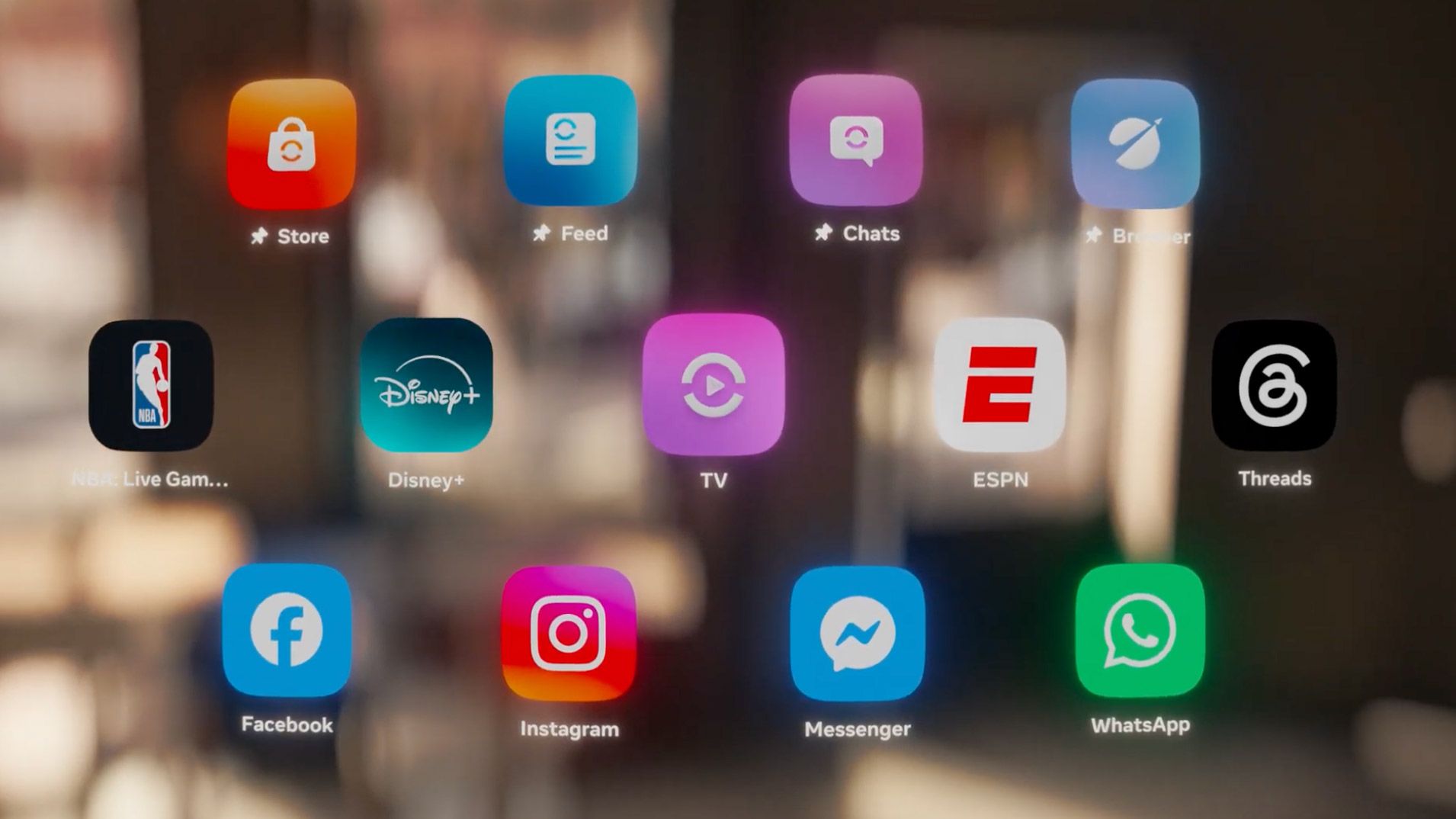
Disney+, a TV App, Avengers: Infinity War VR experience, and a dozen other app icons floated in space, with each one puffing up as I glanced at it.
(Image credit: Lance Ulanoff / Future)
Meta VR Glasses software doesn’t try to reinvent the mixed reality wheel. I had no trouble opening apps, closing them, or even moving windows around. It does add one gesture that I appreciated: scroll.
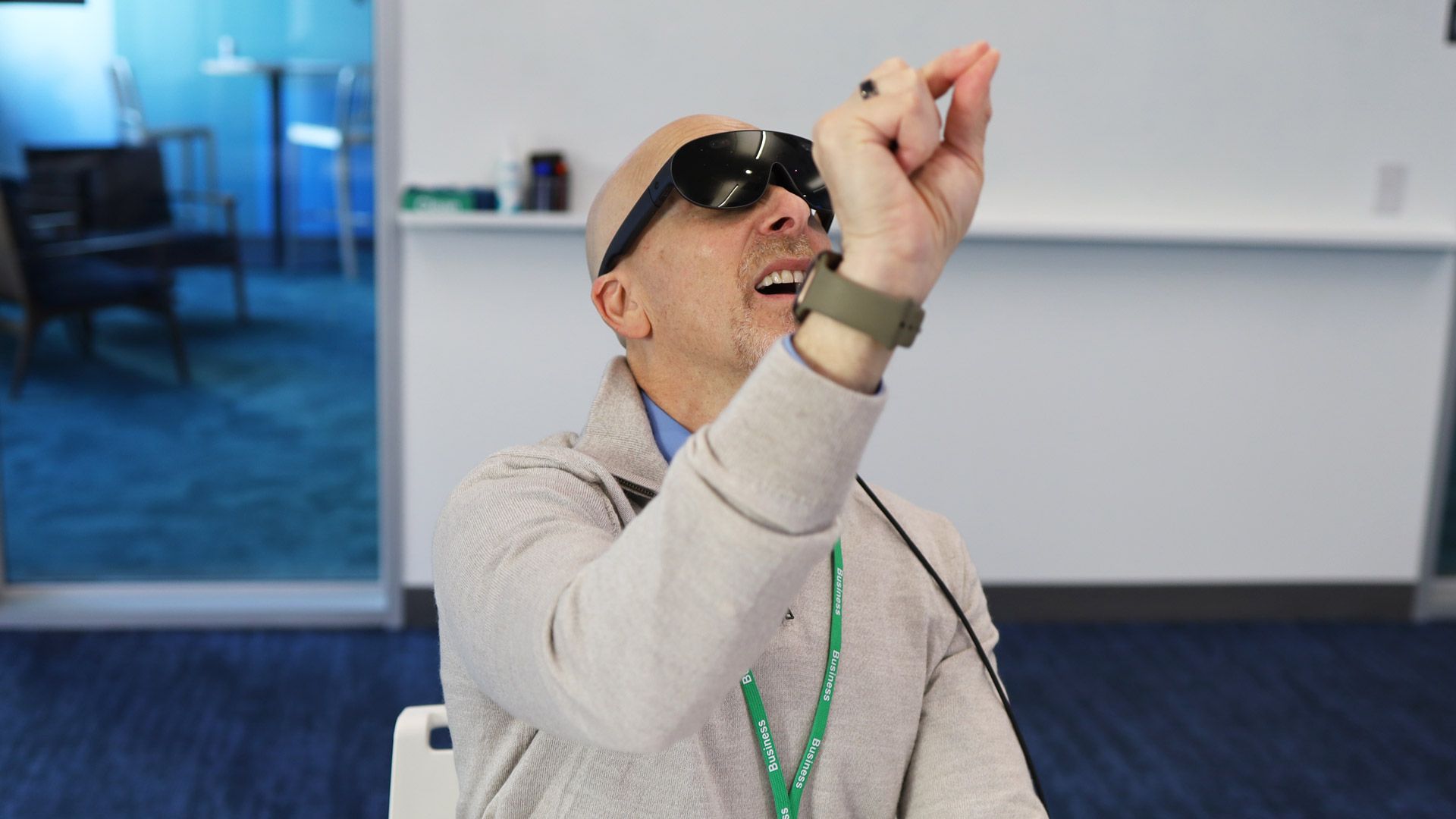
To scroll in any window, I made a gentle fist and then swiped my thumb across the side of my index finger to scroll left, right, up, and down. I was surprised at how quickly I picked this up; I think that has a lot to do with the accuracy of the eye and gesture tracking.
My experiences were limited to a handful of apps, but each one was compelling in its own way.
(Image credit: Meta)
We started with an 8K VR Billie Eilish concert in which I was virtually seated front and center, close enough to take a selfie with the singer. The volume started a bit low for my tastes. Still, I was able to use the volume controls under the right temple to make the audio loud enough that it drowned out the voices of the Meta execs who were trying to guide me (they were watching what I viewed through a cast on a nearby PC — Meta VR Glasses can also cast to your phone).
We switched to the NBA Finals last, title-clinching Knicks game, which put me courtside. At one point, I realized the near-360 view was probably shot by a camera that was also almost on the court. Meta told me they partner with Kosmo (Hesai Kosmo), which uses relatively small 360-degree cameras to capture the action. As the game replay continued, I noticed Timothée Chalamet and Kylie Kardashian were also courtside. I waved, but they did not seem to notice me.
I played a puzzle game called Dragon Grove, which, as you might expect, featured a small, green, cartoony dragon who landed on my outstretched hand and let me pet him. I was reminded of a similar experience with Vision Pro and a butterfly. By launch, Meta expects to have 75+ hands-first games.
(Image credit: Meta)
Meta believes that the primary use cases for Meta VR Glasses will be entertainment and productivity. On the entertainment front, I watched Avengers Infinity Wars VR Enhanced, which took the original film and then gussied it up with 360 surround VR imagery and even lets some of the characters pop out of the original film frame. It was cool but also a bit odd. Why would a director who intentionally chooses to shoot a scene a certain way want you looking anywhere else but his original film? It did, though, make the movie feel more like an amusement park ride, which may appeal to some.
(Image credit: Meta)
Business class
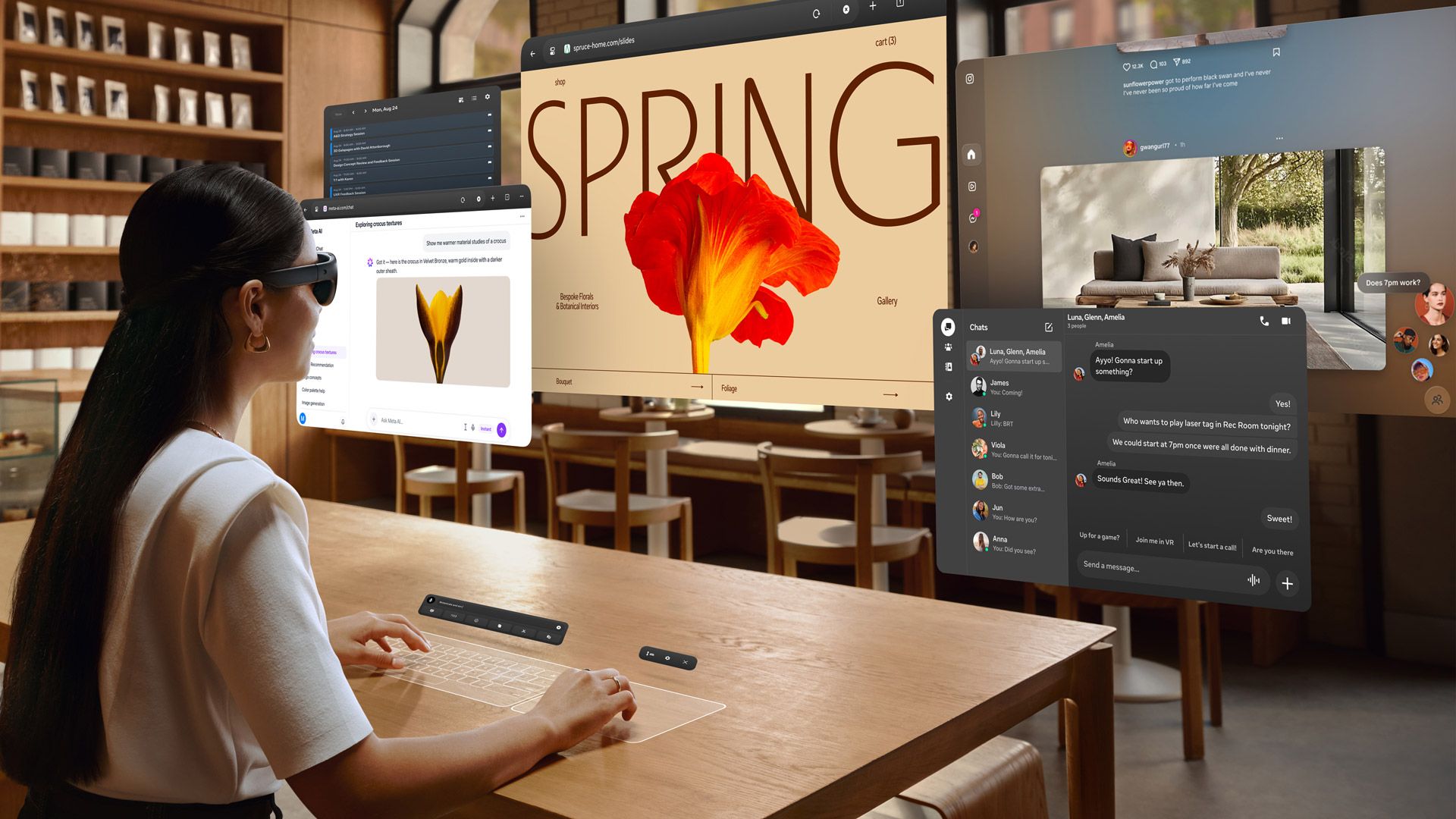
On the productivity front, Meta VR Glasses basically start where everyone else spent years traveling to arrive. I had huge desktop screens all around me that I could move and resize with gestures. At one point, I placed a screen on the ceiling above me. Plus, I could take any screen and make it ultrawide. The only hiccup was when one coding screen stretched the code text into an ultra-wide, almost unreadable format. This is all pre-release software, so bugs like this are to be expected.
Like Vision Pro and Galaxy XR, Meta VR glasses have a floating keyboard, but they’ve also added something new to the mix: a surface keyboard. To enable it, I selected the option from the floating keyboard and then put my hands on the table surface. After a quick scan, a transparent keyboard and trackpad appeared on the tabletop. I could use them just as I would any standard physical keyboard and mouse. My only issue is that, as a terrible touch typist, the lack of any physical key response might make my typing even worse.
(Image credit: Meta)
When I took off the frames, it felt like I’d removed a pair of glasses, not headgear doing its best with straps and head rings to lessen the load on my face. There was no afterburn on my nose or brows.
I do, of course, have questions. Like, even at the more affordable $1,299, will consumers buy into this for a big-screen experience on an airplane and when they’re home alone (you won’t sit next to a family member and tune out to your own VR experience, will you?). Gamers, especially those who are tired of wearing heavy headsets, will surely be interested in Meta VR Glasses, though I don’t know if the Qualcomm Snapdragon Reality Elite processor (XR2 Gen 3), which can supposedly support all the apps in Quest’s library, has the juice to run true AAA titles. I’m glad Meta has the productivity part worked out because I still think that may be the best play for any of these types of wearables: knowledge workers, business travelers, and enterprise.
Who knows, though, maybe Meta VR Glasses is the mixed reality headset to finally break open the consumer market. It impressed me and, to be honest, I can’t wait to wear them again.
(Image credit: Lance Ulanoff / Future)
Need Support?
Need some help? Interested in one of our services? Click to contact us!