Nearly 200 U.S. startups are urging the Trump administration to avoid broad restrictions on Chinese open-weight AI models, arguing a ban would increase costs and hurt innovation.
Meta has launched a new AI campaign featuring CEO Mark Zuckerberg, positioning artificial intelligence as a tool for creativity, connection, and human potential ahead of earnings.
In short, our “starting” versions of Stuart (Kevin Sussman), Denise (Lauren Lapkus), Kripke (John Ross Bowie) and Bert (Brian Posehn) live in a reality akin to The Walking Dead, complete with Mad Max-style apocalyptic outposts and wasps that are the size of cars.
Stuart accidentally triggered this multiverse Armageddon after breaking a device supposedly built by Sheldon (Jim Parsons) and Leonard (Johnny Galecki).
Shortly after Kripke, that universe’s leader, is confronted by the rest of the group, we meet our first secret TBBT cameo: Raj (Kunal Nayyar). He’s basically become a doomsday prepper, working on plans on a blackboard for how to get the device working and get the hell outta dodge.
But just as quickly as we’ve met him, Raj is killed while the others safely teleport to… well, hopefully somewhere better. It’s a bold move, and one that has shocked fans if social media is anything to go by.
However, we’ve been so caught up in Raj’s death that we haven’t considered one major detail… it hasn’t really happened at all.
Only one version of Raj is now dead… and it’s certainly not the one from The Big Bang Theory
Did you forget? This is just one version of Raj in one universe, meaning there’s still an infinite number of Raj’s out there to be found.
As none of the versions of the characters we’re meeting are actually the ones seen in TBBT, original Raj is safely in California doing some science equations in peace (probably).
This doesn’t even rule out Raj appearing again later on in Stuart Fails to Save the Universe. Now that we know he’s a confirmed cameo for the HBO Max spinoff, it would be silly not to use him again where possible. With the overarching narrative so difficult to predict, the possibilities are endless.
If nothing else, this now means that we’re likely to see other TBBT cast members cameo in other episodes, and whether they’re killed off or not. However, who these cameos might be is anybody’s guess.
What we do know for episodes 2-10 is pretty minimal, but the below preview gives us the faintest idea of what to expect. Strap in, is all I’m saying.
A reusable microwave drone reportedly disables more than 50 hostile UAVs per flight
Lockheed Martin pushes cheaper answers to increasingly dangerous battlefield drone swarms
The Morfius X-Rotor counter-drone system enters testing after successful multi-state flight evaluations
Lockheed Martin has unveiled its Morfius X-Rotor counter-drone system at the 2026 Farnborough Airshow, calling it a low-cost answer to challenging drone swarms.
The ground-launched system uses a one-to-many high-power microwave, or HPM, approach designed to disable multiple unmanned aerial vehicles during a single mission.
Company officials say the platform can neutralize more than 50 hostile drones in one flight, a capability aimed at addressing large-scale swarm attacks.
A reusable alternative to costly interceptors
The 2026 Farnborough Airshow has centered largely on affordable counter-drone technology as militaries confront growing swarm threats across the globe.
Lockheed Martin says the approach avoids reliance on costly guided munitions typically used to strike individual aerial threats one at a time.
Unlike traditional interceptors that are destroyed after use, the Morfius X-Rotor is designed to be recovered and redeployed following each engagement.
According to Lockheed Martin, the system is compatible with existing command and control networks and does not require a dedicated sensor or fire-control radar.
That design choice, the company says, lowers the barrier for integration across a wide range of existing battlefield command networks.
The system “sets a new benchmark for counter-drone capability — delivering a high kill rate while keeping the cost per kill low,” said Randy Crites, vice president and general manager of Lockheed Martin Missiles and Fire Control Advanced Programs.
“By leveraging a lightweight, field reusable high-power microwave architecture, we provide the most effective, low-cost solution on the market today.”
Lockheed Martin also announced plans to accelerate prototype production of both the drone platform and its microwave payload for frontline forces.
However, it has not disclosed a firm timeline for when the system might reach full-rate production for its military customers worldwide.
Testing continues amid interceptor shortages
The Morfius X-Rotor recently completed flight testing in Arizona, California, and Oklahoma, where the system reportedly carried out interception missions.
Additional evaluation campaigns are scheduled for the coming months while engineers collect operational performance data before any broader deployment.
Lockheed Martin has not specified which branches of the U.S. military have expressed formal interest in acquiring the Morfius platform.
This announcement arrives as US forces seek cheaper alternatives to costly interceptors after depleting stockpiles against Iranian missiles and Shahed drones.
That shortfall has intensified debate over whether cheaper, non-kinetic systems like Morfius could reduce dependence on expensive munitions over time.
Lockheed Martin used the same event to introduce a lower-cost Patriot interceptor, part of a broader push to reduce per-unit defense costs.
Together, the two announcements suggest Lockheed Martin is betting heavily on affordability as a selling point amid tightening defense budgets.
Whether the Morfius X-Rotor can match its stated kill rate under real combat conditions remains unverified outside company-run trials so far.
Independent assessments of its effectiveness against dense, coordinated drone swarms will likely determine whether militaries adopt the system at scale.
Microsoft’s biggest hardware releases of 2026 include new Surface Laptop and Surface Pro business models, lower-cost Surface configurations, and Project Solara.
AMD Zen 5-based EPYC 9965 is on sale on eBay for just under $6,000
With 192 cores and 384 threads in tow, AMD’s offering can handle as much as 6TB of RAM per processor for AI-centric workloads
The CPU not only offers the highest core count in all x86 CPUs to date, but also holds its own against the competition
When AMD unveiled its new EPYC CPUs in June 2024, one particular chip caught everyone’s eye, given how outrageously powerful it was compared to the competition.
The AMD EPYC 9965 CPU was also the company’s most ambitious server-grade offering to date, and one that has held its own against the competition with relative ease thanks to its yet-unmatched 192-core, 384-thread x86 configuration.
At a suggested MSRP of $14,813 (now $11,988) at launch, it is also one of AMD’s most expensive products across the board, with only a few of its server-grade GPUs pushing noticeably higher.
Why the eBay listings are somewhat hard to digest
Despite being unveiled over two years ago, the EPYC 9965 CPU remains largely unchallenged by the competition, thrashing most benchmarks with relative ease. It remains the flagship server chip for AMD-based systems worldwide, with Team Red shipping it globally, including China.
The chip itself is a genuine monster. The EPYC 9965 packs 192 Zen 5c cores and 384 threads onto a single SP5 package, with a 2.25 GHz base, a 3.35 GHz all-core, and a 3.7 GHz maximum boost, 384 MB of L3 cache, twelve channels of DDR5, 128 lanes of PCIe 5.0, and a 500 W default TDP, AMD’s highest yet. It is the densest part in AMD’s 9005 stack, built for cloud providers aiming to cram the maximum number of virtual machines into a rack.
All in all, it is designed primarily to serve hyperscalers and cloud providers, with a focus on low-power, efficient cores that dominate such setups.
Even at its reduced reference price of just under $12,000, eBay listings selling the same CPU for just under $6,000 seem inexplicable, offering a sub-50% discount over current advertised prices and over 60% off its original launch price.
This is even lower than the last time we tracked this CPU in 2025, but there might be an explanation of sorts for what would otherwise be seen as an anomaly. Most server-grade CPUs trade at prices below MSRP, with OEM and negotiated discounts that quickly add up to significant savings for large-scale deployments.
The other explanation that often applies to older server-grade CPUs that often get cycled out or decommissioned by data centers does not apply here, however; the EPYC 9965 does not have a successor yet, and it is hard to imagine a currently available CPU replacing AMD’s most capable chip yet in a data center just yet
Other reasons prices are low could include excessive inventory, canceled orders, or simply someone liquidating hardware in an industry that is increasingly GPU- and memory-focused to meet its AI needs.
Most industry players prefer a direct OEM solution, especially given AMD’s support for PSB-locking (secure boot) on their CPUs for certain vendors, which makes them unwilling to purchase from 3rd-party sellers. This also raises the risk profile for buyers, who could unwittingly end up purchasing a vendor-locked CPU, making for a rather annoying testing and return process.
With a shift in spending towards GPUs and memory becoming prohibitively expensive, hardly helping matters, while enterprise consumers are still buying up the EPYC 9965, prices might reflect a market reality: they are unlikely to be scouring eBay for their next 192-core monster CPU purchase, even assuming they have a compatible motherboard and memory modules to match.
EOFY is a good time to check gaming laptop deals, even if the laptop isn’t going to be used for work. Gaming laptops can be quite expensive, so a legitimate discount can make a bigger difference than it does on a basic everyday laptop.
That said, a gaming laptop can also be a powerful workstation if your work does need extra grunt. A fast CPU, dedicated GPU and plenty of RAM can help with video editing, 3D work, coding, running AI tools, creative apps or just keeping a lot of browser tabs and programs open at once.
It’s also worth checking our main EOFY laptop deals hub even after June 30, because in previous years we’ve seen some great laptop deals hang around or pop up in early July as retailers clear leftover stock.
For gaming laptops, we have deals from lower-cost RTX 5060 machines with generous RAM, through to much more expensive RTX 5090 desktop replacements.
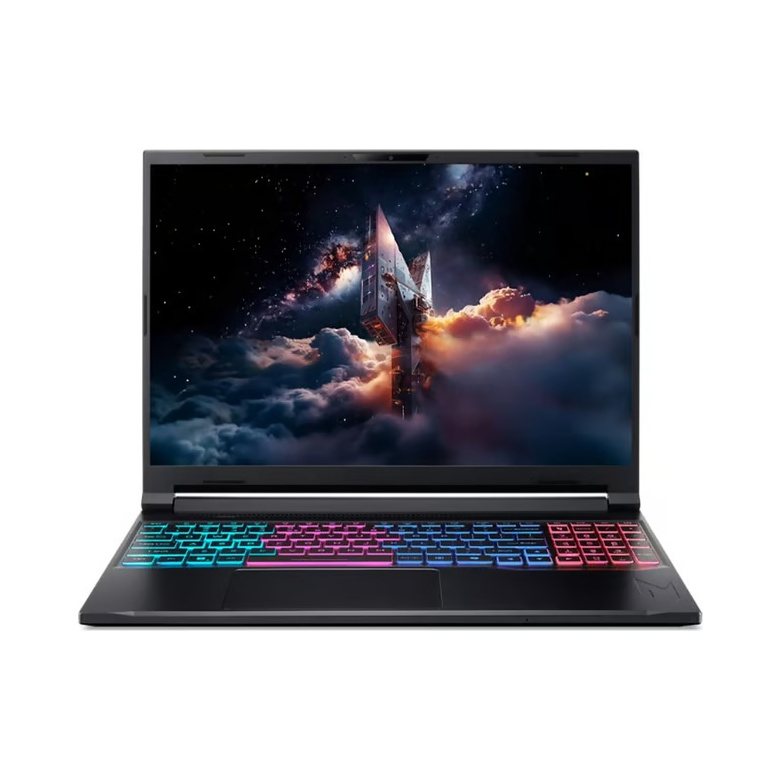
This is a tempting price if you want a gaming laptop that can also handle study and everyday work. The Core 7 240H, RTX 5060, 32GB RAM and 1TB SSD make the spec very capable for the money, while the 16-inch 1920 x 1200 180Hz display means you can push older titles to high frame rates.View Deal
For those who want serious gaming power, the Legion Pro 7i with an Intel Ultra 9 275HX processor and RTX 5090 GPU is one of the better options going, even though it’s 15% more than the price we saw on Black Friday in 2025. There are very few comparable machines at this price, making it an excellent deal if you are willing to spend big. Read our review to learn more.View Deal
The Acer Nitro V 16S is a good option for a buyer who wants current-gen gaming performance without paying big money. You still get an RTX 5060, 32GB RAM, a 1TB SSD and a 180Hz display for AU$1,777, which is a lot of hardware for the price.
The RTX 5060 is a lower-end current-gen GPU, but that’s still a good fit for 1080p or 1200p gaming, especially if you’re happy to use DLSS or turn down a few settings in the most demanding games. With RAM prices rising, 32GB of RAM is harder to take for granted at this price, so it’s good to see Acer include it rather than cutting back to 16GB.
The Lenovo Legion Pro 7i is at the other end of the scale. Our Lenovo Legion Pro 7i review described it as “perfect for a desktop replacement, just okay as a portable”, and that’s exactly how I’d frame this deal.
You’re not buying it because it’s cheap or easy to carry everywhere. You’re buying it because you want a very powerful 16-inch gaming laptop with an RTX 5090, 32GB RAM, a 1TB SSD and a 240Hz OLED screen.
Our review gave the Legion Pro 7i 4 stars and called out its excellent gaming performance, gorgeous OLED screen and useful port selection. That makes it a good fit if you want one machine for demanding games, an external monitor setup and heavier work like editing, rendering or development.
The big caveat is battery life, which our review said “is not great”, but that’s the trade-off with this kind of desktop-replacement gaming laptop.
If neither of these gaming laptop deals is quite right, our main EOFY laptop deals hub has more options across cheaper Windows laptops, MacBooks, 2-in-1s and higher-end gaming machines.
Southwest banned human-like and animal-like robots from cabins and checked baggage after viral flights raised concerns about lithium-ion battery safety.